


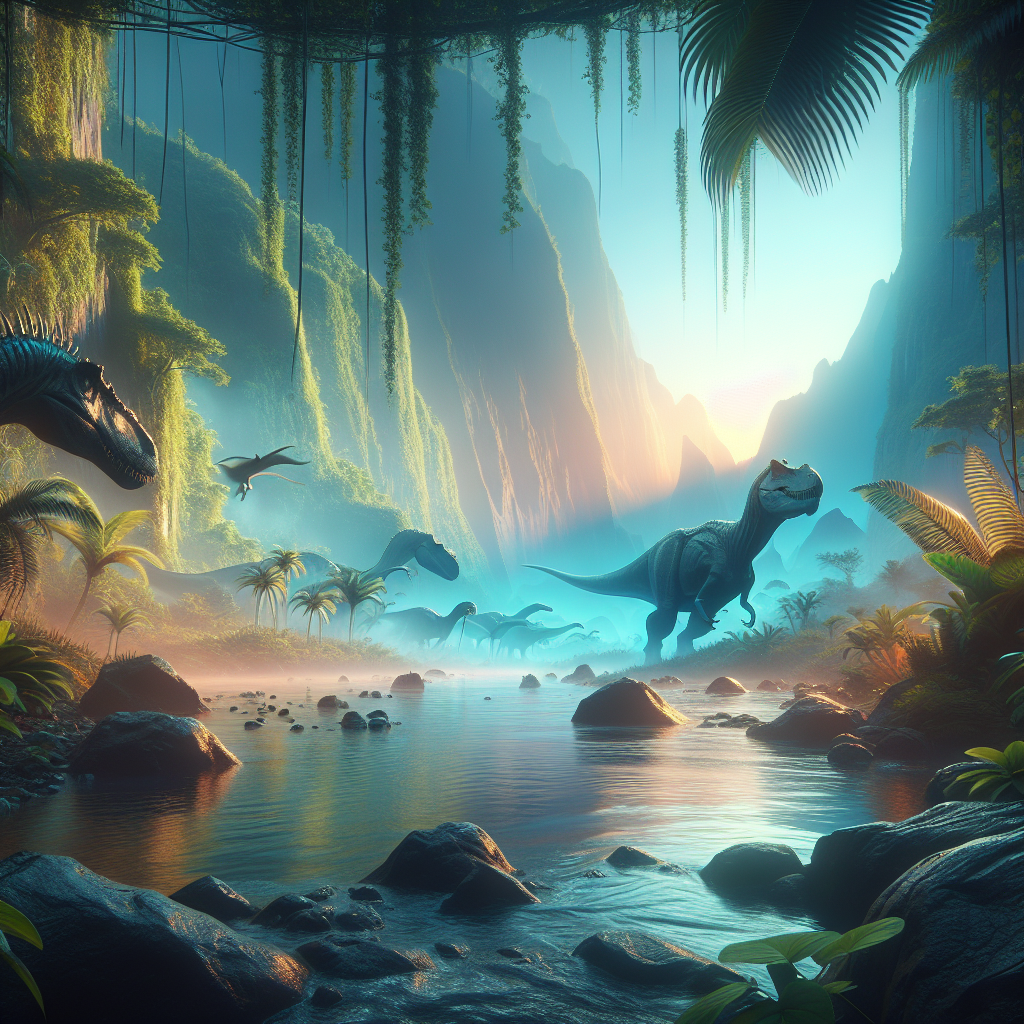
Unraveling the Mysteries of Dinosaurs: A Journey Through Time
Dinosaurs have long captured the imagination of young and old alike, with their massive sizes, diverse species, and intriguing extinction. These prehistoric giants roamed the Earth millions of years ago, leaving behind a legacy that continues to fascinate scientists and enthusiasts today. In this blog post, we’ll explore the world of dinosaurs, their evolution, and the ongoing discoveries that keep their legacy alive.
The Evolutionary Journey of Dinosaurs
The story of dinosaurs begins in the Mesozoic Era, which is divided into three periods: Triassic, Jurassic, and Cretaceous. During the Triassic period, over 230 million years ago, the first dinosaurs emerged. These early dinosaurs were small and bipedal, and they quickly diversified into a wide range of species.
As the Jurassic period unfolded, dinosaurs rose to dominance. This era was marked by the appearance of iconic species like the long-necked Brachiosaurus and the fearsome Allosaurus. The warm climate and lush vegetation provided an ideal environment for these creatures to thrive.
The Cretaceous period was the zenith of dinosaur diversity. This era saw the evolution of some of the most well-known dinosaurs, including the Tyrannosaurus rex and the Triceratops. However, it also marked the end of the dinosaurs, as a massive extinction event wiped out nearly all dinosaur species, paving the way for mammals to dominate.
Understanding Dinosaur Behavior and Biology
While bones and fossils provide us with a glimpse into the physical attributes of dinosaurs, understanding their behavior and biology remains a fascinating puzzle for paleontologists. Recent discoveries and advancements in technology have allowed scientists to gain deeper insights into how these creatures lived.
**Feeding Habits and Diets:** Dinosaurs were both herbivorous and carnivorous, with some species being omnivorous. Herbivores like the Stegosaurus had specialized teeth for grinding plant material, while carnivores like the Velociraptor had sharp teeth and claws for hunting.
**Social Behavior and Communication:** Evidence suggests that some dinosaurs, like the Hadrosaurs, traveled in herds and may have communicated using vocalizations. Fossilized nests and footprints have provided clues about their social structures and parenting behaviors.
**Adaptations and Survival:** Dinosaurs developed unique adaptations to survive in their environments. For instance, the armored Ankylosaurus had protective bony plates, while the agile Deinonychus had a sickle-shaped claw for hunting.
The Legacy of Dinosaurs in Modern Science
Despite their extinction, dinosaurs continue to play a crucial role in modern science. The field of paleontology is ever-evolving, with new discoveries shedding light on these ancient creatures.
**Advancements in Fossil Analysis:** Modern technology, such as CT scanning and 3D modeling, has revolutionized the way scientists study dinosaur fossils. These tools allow for a more detailed analysis of bone structures and potential soft tissues.
**Dinosaur DNA and Cloning Theories:** The idea of cloning dinosaurs, popularized by films like Jurassic Park, remains a topic of debate among scientists. While extracting viable dinosaur DNA is unlikely, research continues in understanding ancient DNA and its applications.
**Dinosaurs and Climate Change:** Studying the extinction of dinosaurs provides valuable insights into the effects of climate change and environmental shifts. By understanding past extinction events, scientists can better predict and respond to current ecological challenges.
In conclusion, dinosaurs may have vanished from the Earth millions of years ago, but their legacy endures through the work of dedicated scientists and the ongoing fascination of the public. As we continue to uncover the secrets of these ancient giants, we not only learn about their past but also gain a deeper understanding of our planet’s history.